 Low MOQ OEM/ODM
 Free Digital Proof
 Phone:
To choose a dog harness size, measure your dog's chest, then compare it with the chart for the exact harness you want. Weight, breed and an old S, M or L label are not enough to make the choice. Keep the measurements handy when shopping or asking a retailer for help.
1. Prepare a tape and open the size guide
Use a soft measuring tape. If you do not have one, use string, mark the length and measure it against a ruler. Have your dog stand naturally, and open the measuring diagram for the selected harness before you begin.
2. Measure around the chest
Chest girth is the distance around the rib cage. For many walking harnesses, the measuring point is the widest part of the chest behind the front legs. Use the location shown in the selected harness's measuring diagram.
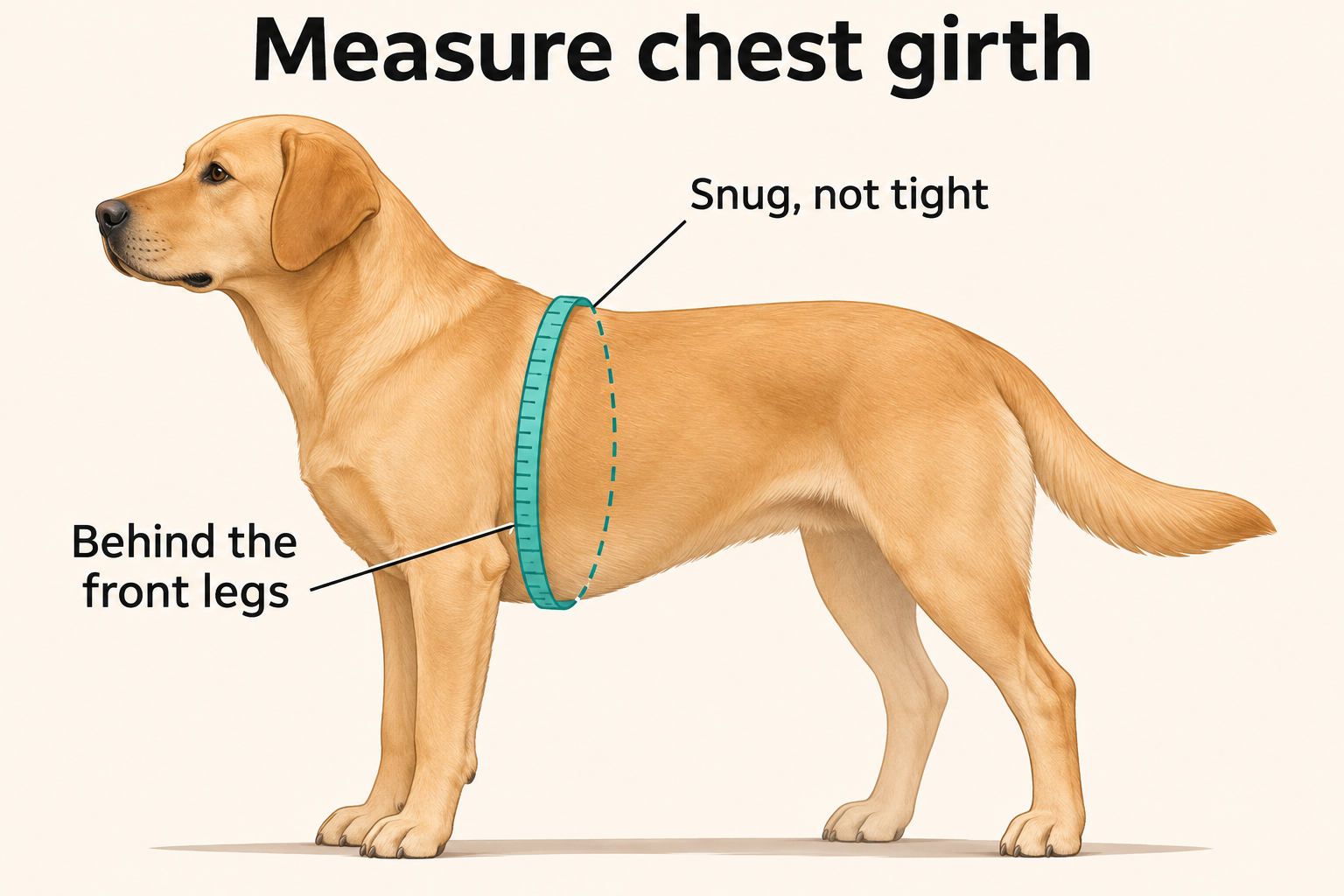
Pass the tape underneath the chest and over the back to make one complete loop. Keep it flat and untwisted, without pulling it tight into the body. Check the product diagram for the precise position; do not measure around the narrow waist or soft belly instead.
Read and record the number with its unit, such as centimetres or inches. Repeat the measurement to check your result.
3. Check whether a neck measurement is needed
Some charts also require a neck measurement. Follow the point shown in that harness's diagram rather than automatically using your dog's collar size. A harness opening can sit differently from a collar, so an old collar measurement may not answer the question. Different constructions can require different measuring points.
Write the chest and neck numbers separately. Do not add a fixed amount of extra room unless the chosen product's instructions tell you to.
4. Compare the measurements with that product's chart
Match every required measurement to the listed range and check the units. Use weight as supporting information if the chart includes it, rather than replacing the chest measurement with a weight estimate. A size letter from another harness does not establish the size you need here.
If your dog falls between sizes, check the guidance for that exact model. Recommendations can differ by design and intended fit. There is no universal “always size up” rule. If the chart leaves you unsure, send the measurements and style reference to the seller before ordering.
5. Adjust and check the harness on your dog
Follow the harness's putting-on and adjustment instructions. Check that the straps lie as intended and the girth strap sits around the rib cage. Check for a strap that sits too close to the underarms or too far back on the abdomen.
Let your dog take a few steps and check again for rubbing, excessive shifting or restricted movement. Use the maker's clearance guidance; a measurement alone is not a final fit check.
Before you buy, save: the harness model, chest measurement, any required neck measurement, units and chosen size.
For pet brands and retailers developing a harness range, request a size chart and measuring instructions for each selected style. See our harness sizing and private label development guide when planning your range. Discuss your harness enquiry or email sales@petsaccessoryhub.com.
Further measuring references
Ruffwear measuring guide · Kurgo harness fit guide · Blue-9 fitting checks