 Low MOQ OEM/ODM
 Free Digital Proof
 Phone:
Harness returns often begin with an unclear size chart rather than a visible sewing defect. A successful custom dog harness manufacturer project connects body measurements, adjustment range, pattern shape, materials, hardware and fitting instructions. Buyers should approve the size system before multiplying colors and logo variants.
Choose the harness structure first
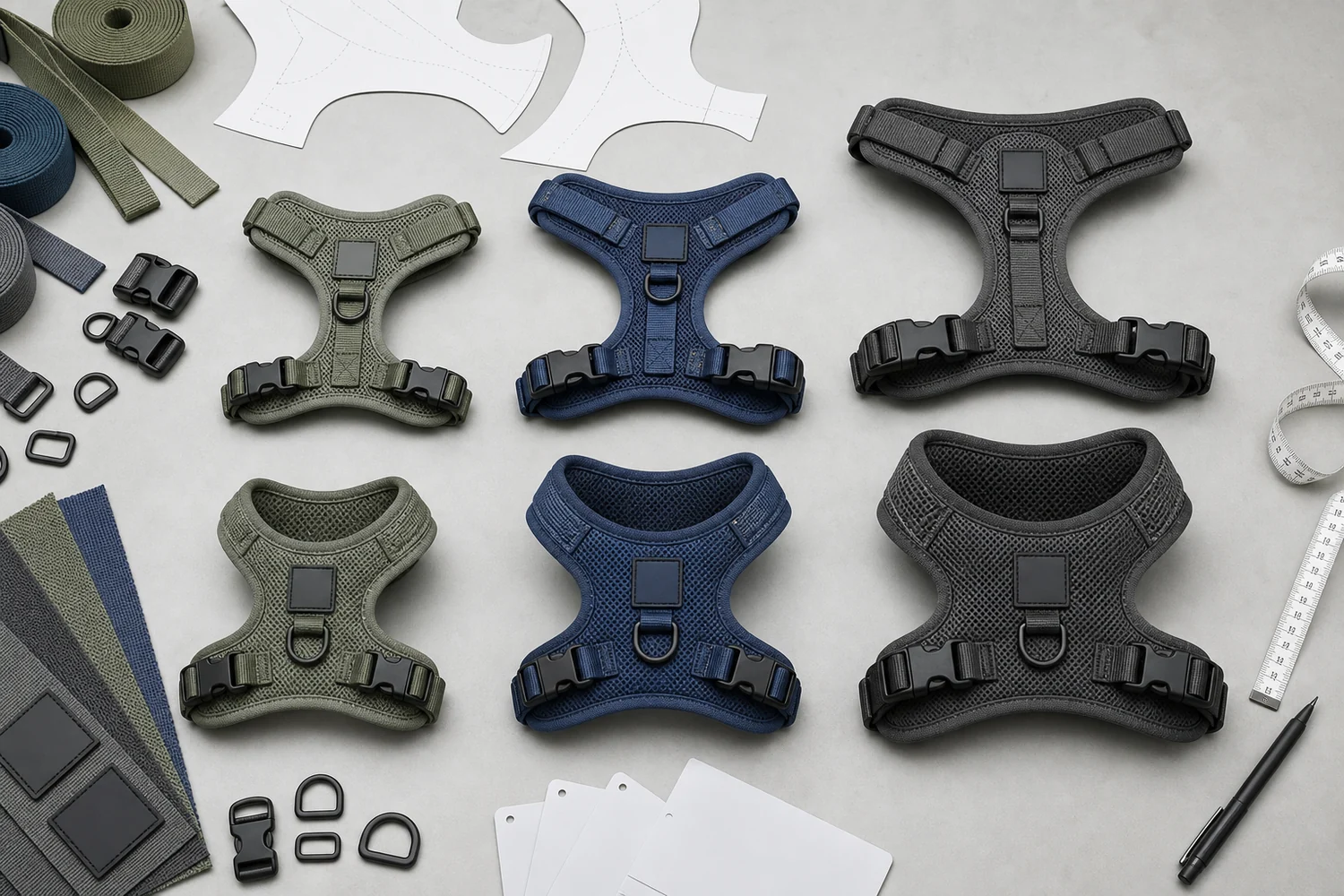
Adjustable strap, step-in, vest, no-pull and Y-front harnesses use different measurement logic. Define the intended activity, target dog shapes, attachment position, adjustability, coverage and desired retail appearance. A lightweight fashion harness and a padded outdoor harness should not share a size chart merely because both use labels such as S, M and L.
Start with a suitable custom dog harness base and document which construction points can change without disturbing fit or strength.
Define measurement points
Common body inputs include neck or lower-neck circumference, chest girth, back or chest-panel length and body weight as a secondary guide. Product measurements may include minimum and maximum strap range, panel dimensions, opening size and strap width. Use diagrams to show exactly where every measurement begins and ends.
Do not treat weight as the only sizing input. Dogs of similar weight can have different chest and neck proportions. Provide an overlap rule between sizes so customers near a boundary know which size to select.
Build a graded size range
| Size-control item | Approval question |
|---|---|
| Adjustment range | Is useful adjustment available without excessive loose webbing? |
| Panel shape | Does coverage remain balanced across small and large sizes? |
| Hardware scale | Are buckles and rings strong enough without adding unnecessary weight? |
| Seam allowance | Are finished measurements repeatable after binding and padding? |
| Logo placement | Does the logo remain centered and visible on every size? |
Approve one base size first, then review a size set covering at least the smallest, middle and largest construction. This catches grading problems before full production.
Select fabrics, webbing and hardware
Mesh, neoprene, polyester, coated fabrics, reflective trim and soft bindings can be combined for comfort and structure. Specify each layer, finished thickness, stretch direction, color and care requirement. Match webbing width to buckles, adjusters and D-rings, and avoid using one hardware size across the full range unless the weight and fit have been evaluated.
If the harness belongs to a walking collection, coordinate it with the custom leash and custom collar. Shared webbing, hardware finishes and labels create a more consistent private label range.
Apply the logo without affecting fit
Options include woven labels, rubber patches, embroidery, heat transfer and printed fabric. Choose a method appropriate to the panel, flexing and wash requirements. Provide vector artwork, finished dimensions, Pantone references and placement by size. A logo that fits the large sample may need a controlled smaller version for the smallest harness.
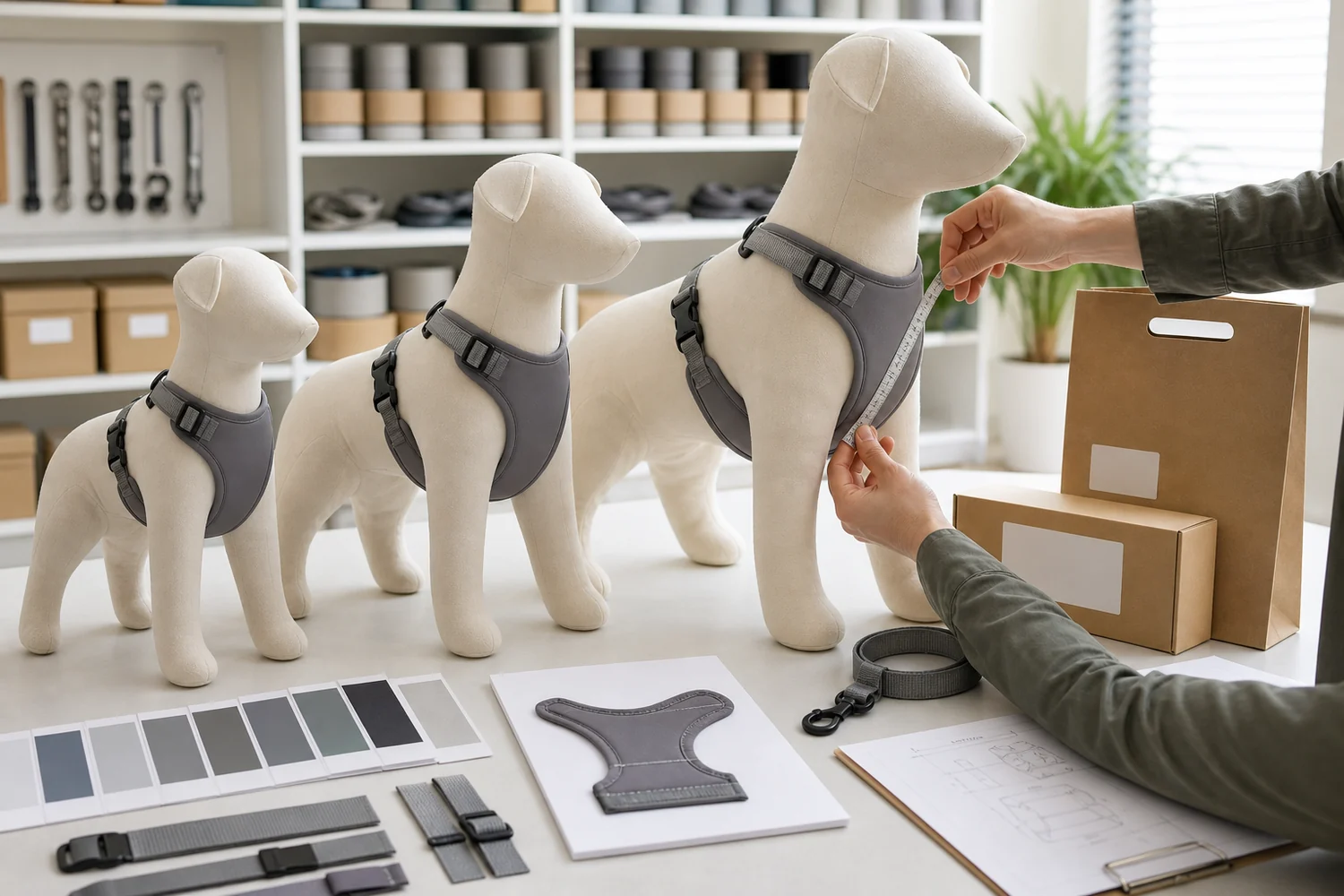
Run fit samples and production checks
Use controlled dog measurements or approved forms and record the selected size, strap positions, movement, pressure points and ease of putting on the product. Fit review does not replace strength testing. Separately check buckle operation, strap slippage, ring attachment, seam security and any agreed assembled-product load test.
During inspection, measure each size against the approved chart and tolerance. Review stitching, binding, left-right symmetry, color, logo, labels, cleanliness and packed quantity. Keep the approved sample and current pattern or specification version as the production reference.
Prepare retail sizing and packaging
The customer-facing size chart must use the same body points used during development. Include a clear diagram, units, adjustment range, fitting notes and contact guidance. Packaging should display size and color without hiding required warnings, care details, barcode or origin information.
Request a private label harness quote
- Harness structure, use case and target dog group
- Body and finished-product measurements by size
- Fabric layers, webbing, hardware, reflective and padding details
- Quantity by size and color, logo files and packaging
- Fit samples, testing, inspection, destination and required delivery date
Request a private label dog harness quote with a complete size matrix and artwork. Clear measurement rules make sampling faster and give the final size chart a reliable production basis.