 Low MOQ OEM/ODM
 Free Digital Proof
 Phone:


Dog harness fabric selection starts with a clear description of the finished product: its surface texture, the layers against the dog, the direction of the panels and the way the edges are finished. For pet brands, retailers and distributors, these details turn a colour reference into a more useful sourcing brief.
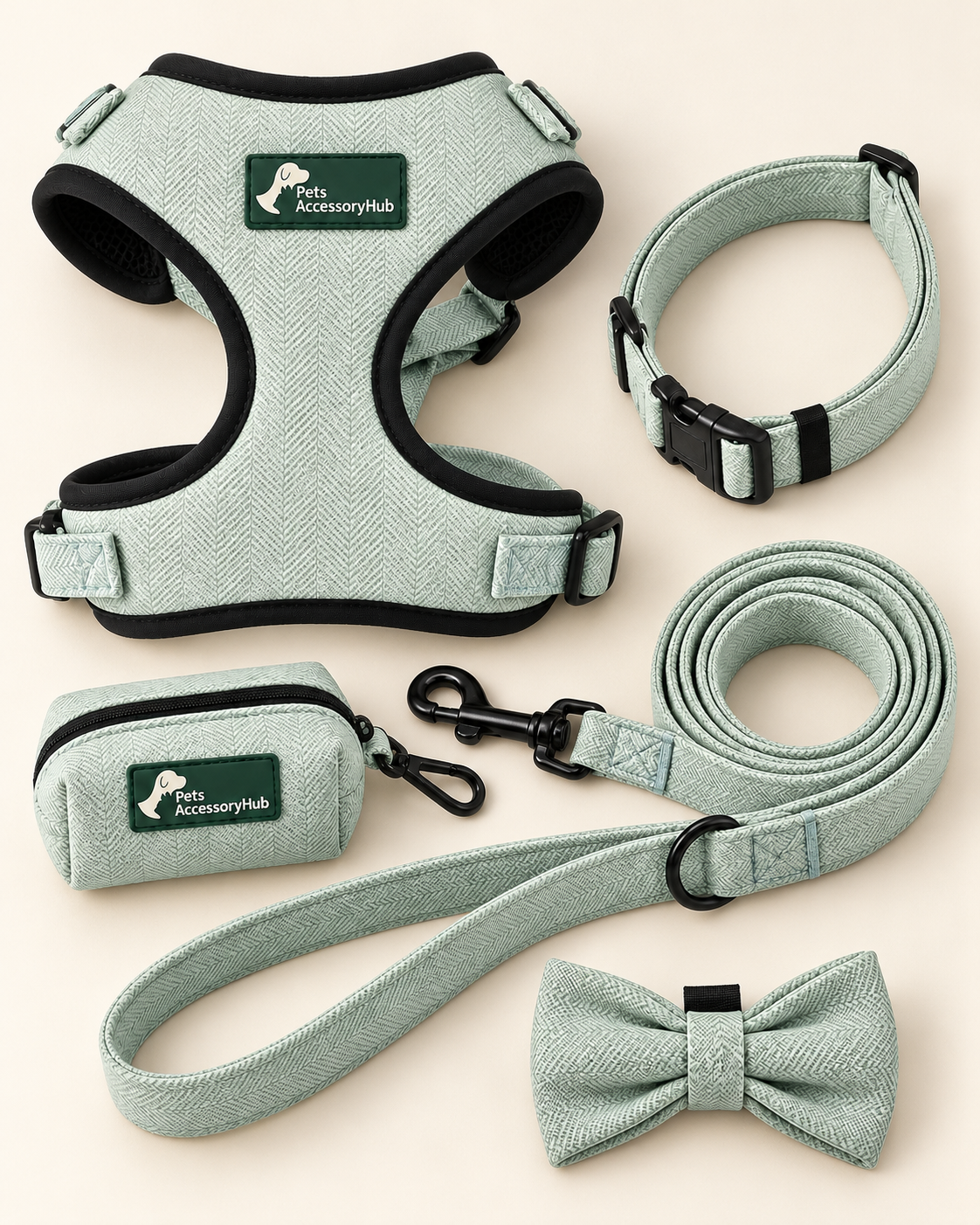
A sage herringbone dog harness provides a helpful example. The outer appearance, black binding, mesh interior and matching accessories can each be reviewed separately. Record what you want the sample to show, then ask the supplier to confirm the specifications that a photograph cannot establish.
1. Describe the fabric appearance and composition separately
Begin with colour, visible pattern, texture and the overall finish you want. For this collection, “pale sage with a fine herringbone appearance and black trim” is more specific than “green fabric.” Supply a close-up and a full-product view so the supplier can distinguish the surface detail from the overall colour direction.
Keep fibre composition in a separate line of the brief. A herringbone appearance does not identify the fibre blend. Ask for the proposed material specification, backing or other layers, and any supporting information needed for your product description. Do not approve a wool-content, recycled-content or performance claim from an image.
2. Review the complete layer construction
For custom dog harness construction, specify which surface is decorative and which areas contact the dog. Ask the supplier to identify the outer fabric, any intermediate layer and the lining, including where those layers begin and end around openings and closures.
Review the assembled sample for thickness at folded edges, the feel of the interior and how the layers sit together. If you want to describe the harness as breathable, quick-drying or suitable for a particular activity, agree what evidence is needed before using that description. A visible mesh texture alone is not a finished performance specification.
3. Mark the pattern direction on each panel
Directional patterns deserve an explicit placement reference. Mark the top and bottom of the front panel and show the intended line of the herringbone. Review both sides together and agree whether particular lines or motifs need to align across joins. Give the supplier a clear reference for acceptable variation.
Check every size you intend to offer. A smaller panel can display a different portion of the pattern, while a folded strap may reveal its reverse. Keep these visual decisions alongside the measurements in your custom dog harness sizing brief. The cutting reference should come from the agreed product pattern and size specification.
4. Make edge binding and seam details visible
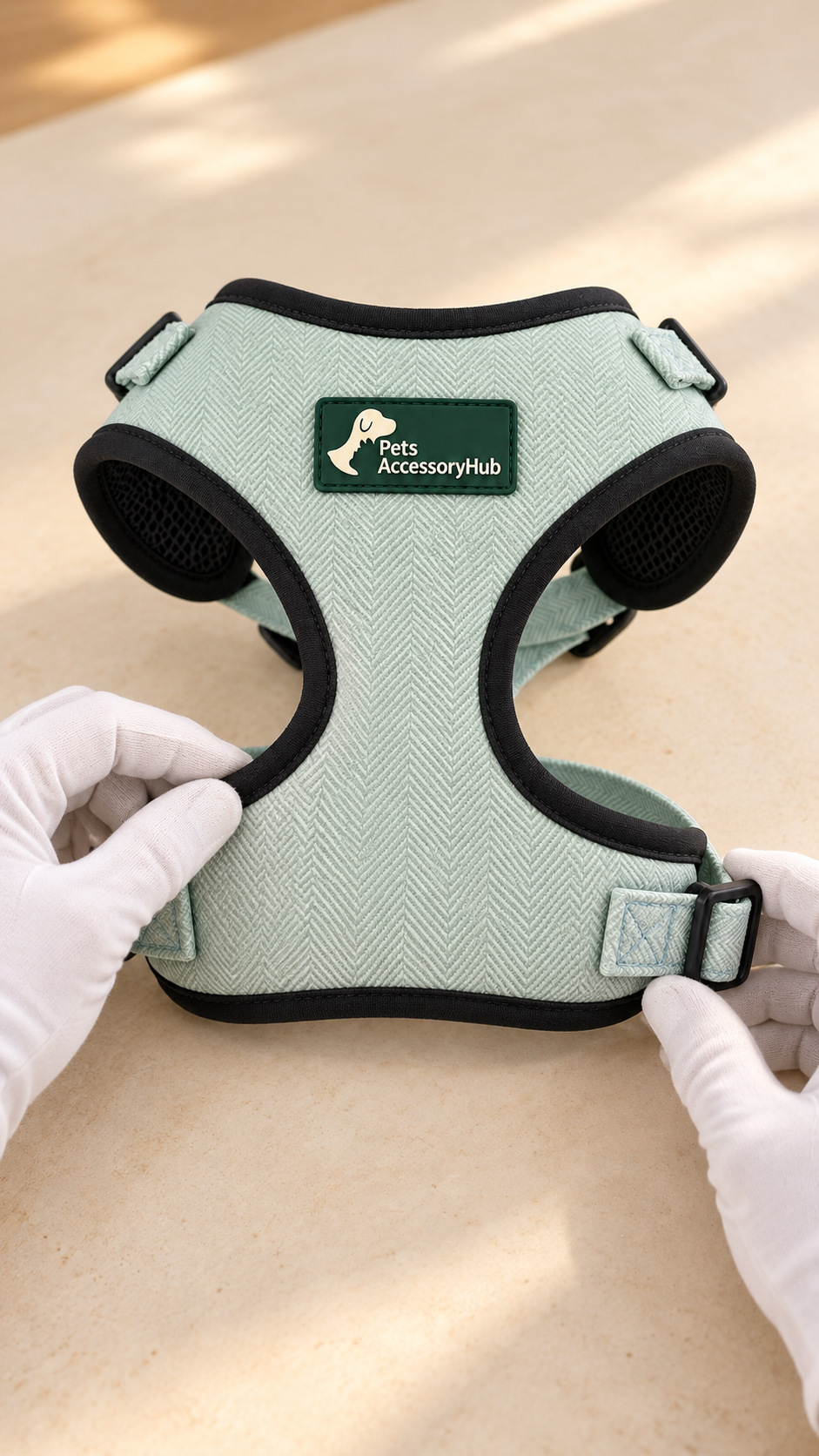
Binding frames the product and covers the transitions between layers. In the sage reference, the black edge is a distinct part of the design. Specify its colour and intended finished appearance, then ask the supplier to document the material and dimensions proposed for the sample.
Inspect curved openings, changes in direction and the places where binding starts or ends. Look for exposed raw edges, puckering, uneven coverage and bulky joins. For dog harness stitching, request close-ups of seam paths, thread colour and strap attachment areas. Record the construction you approve; an attractive stitch line does not by itself establish strength or suitability for a stated load.
5. Check the fabric where straps and branding meet
Review the fabric around adjusters, folded strap ends and hardware attachment points. Ask the supplier to show the intended strap routing and attachment construction. Check that the proposed layer thickness works with the actual adjuster and closure selected for that size.
For a private label dog harness, identify the logo patch artwork, position, orientation and attachment method. Inspect how the patch sits on the finished panel and whether it overlaps seams or folds. Keep the approved artwork and placement reference together so later photographs and reorders use the same version.
6. Review matching accessories item by item
A coordinated range may include a harness, collar, leash, waste-bag holder and bow tie. Give each included item its own reference. Narrow straps, curved pouches and folded bows show different areas of the fabric, so compare the actual pieces together under consistent lighting.
Agree which differences are intentional and which require adjustment. Document the colour direction, pattern orientation, trim and hardware finish for every item. This article focuses on material and construction decisions; use a separate packing list to define the products and quantities included in each retail kit.
A concise fabric-review brief to send your supplier
- Product drawing, size range and marked panel orientation.
- Outer appearance reference and requested material specification.
- Lining, intermediate layers, binding and thread details.
- Photos of curved edges, joins and strap attachment areas.
- Logo artwork, location and attachment reference.
- Any intended product claims and the evidence required to support them.
Keep a dated record of the agreed sample and any requested changes. For the wider approval process, see our OEM pet accessory sampling checklist.
Common buyer questions
Does a herringbone dog harness have to be wool?
The visible pattern does not confirm composition. Request the supplier’s material specification before deciding how to describe the fabric to customers.
Can we approve fabric from a colour photograph?
Use photographs to communicate the intended appearance. Review the physical material and assembled sample for colour, feel, layers and finishing before recording approval.
What should accompany a quotation request?
Send your item list, quantities, size breakdown, reference images, branding requirements and target market. Flag unresolved material or construction choices so the quotation can identify its assumptions.
Developing a custom harness range? Request a dog harness quotation with your fabric direction and product brief, or email sales@petsaccessoryhub.com.