 Low MOQ OEM/ODM
 Free Digital Proof
 Phone:
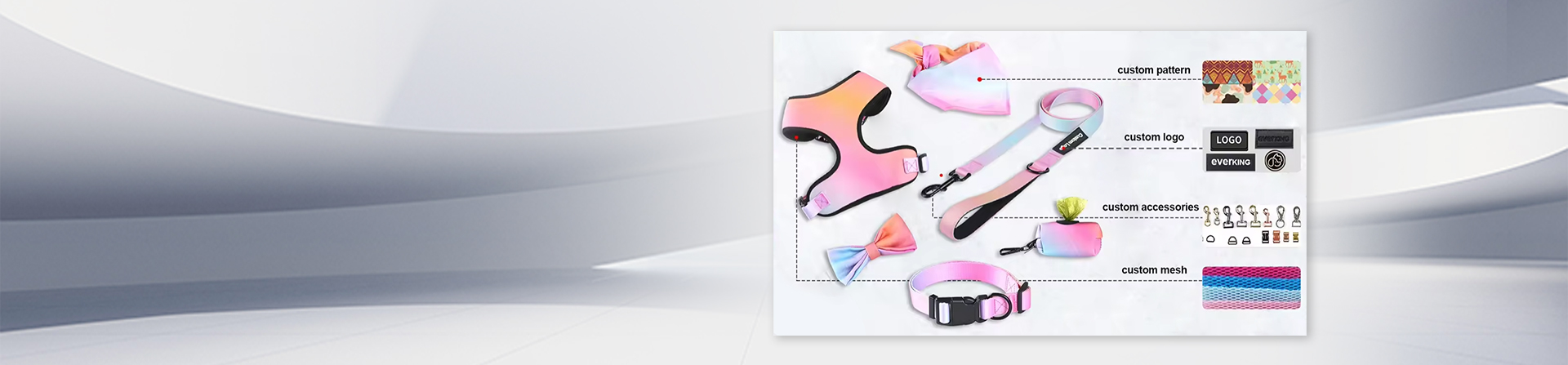
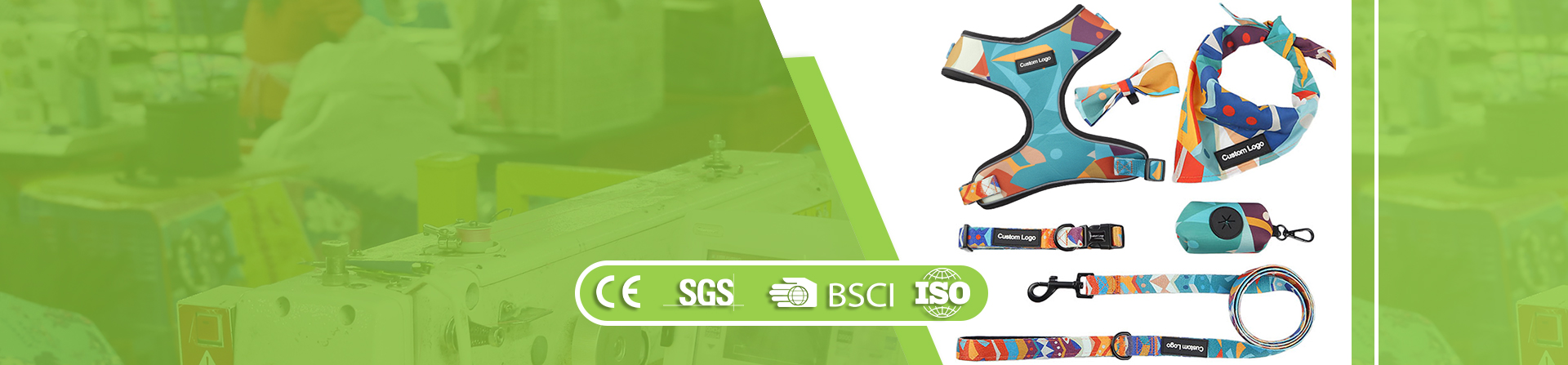

A seasonal pet collection needs more than a shared pattern. A ghost that reads clearly on a wide harness panel may disappear when cropped onto a narrow leash. A six-piece campaign photograph may also leave a buyer unsure which accessories are included in the quoted kit. For pet brands, retailers and distributors, the practical task is to approve the collection at both item and kit level.
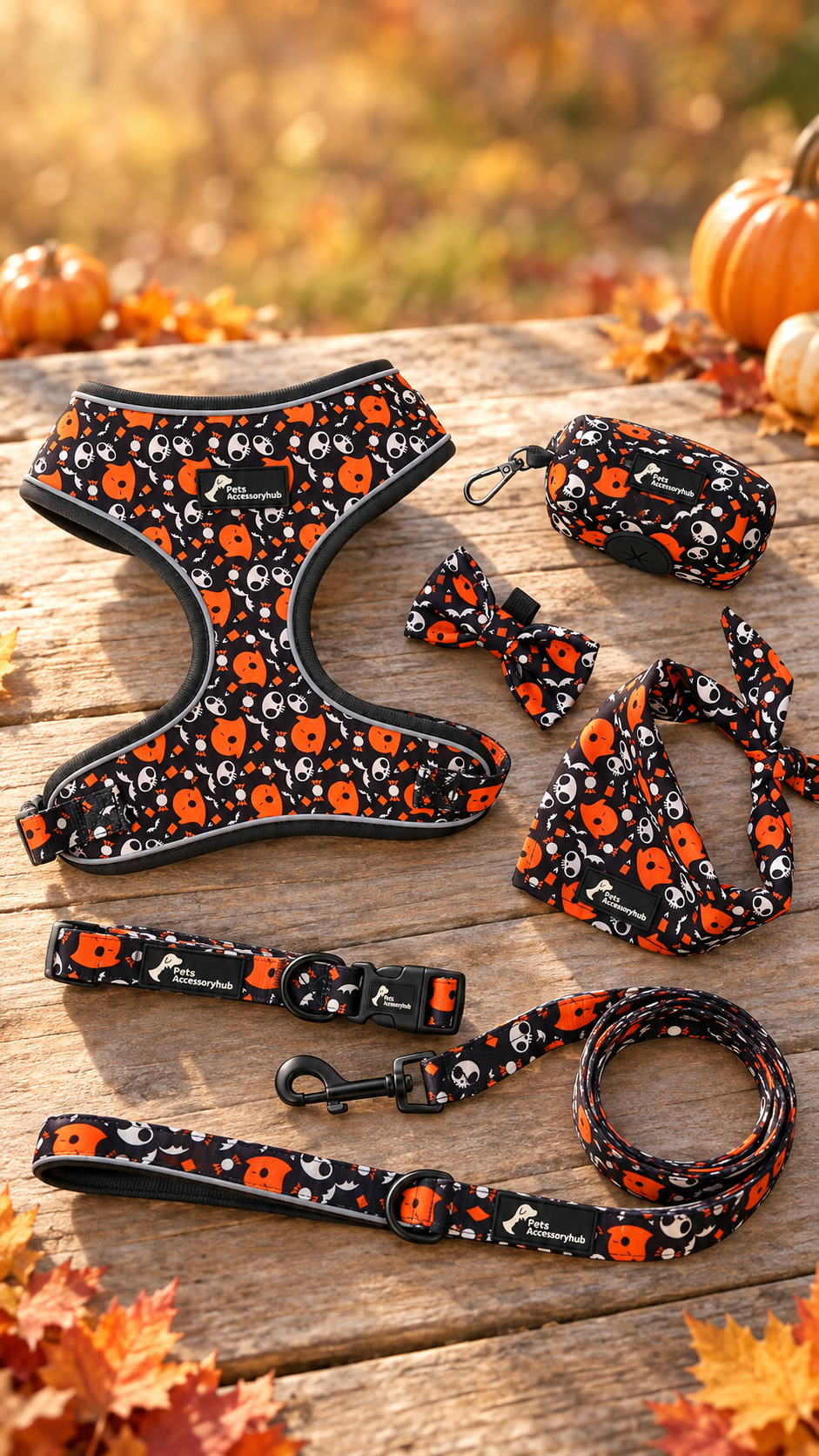
The Halloween direction shown here brings together a vest harness, leash, collar, bow tie, bandana and waste-bag pouch in a black, orange and white print. The same planning approach works for other seasonal ranges: define the assortment, control the artwork across different shapes and keep the approved kit connected to its retail presentation.
Collection images illustrate the design direction. Confirm final construction, dimensions and fit through the physical sample approval process.
1. Separate the collection from the saleable kit
Give the collection a name and artwork version, then list every saleable item with its own SKU. A broad assortment does not mean that every item belongs in every bundle. For example, a buyer might request a harness, leash and pouch as one kit, while quoting the matching collar, bandana and bow tie separately. Describe that choice explicitly rather than writing only “one Halloween set.”
For each kit, record the exact contents, harness or collar size, accessory variants and quantity. State which components change with size and which remain shared. Ask the supplier to identify any assumptions in the quotation. This prevents a campaign image from becoming the only packing instruction.
2. Approve motif scale on each product shape
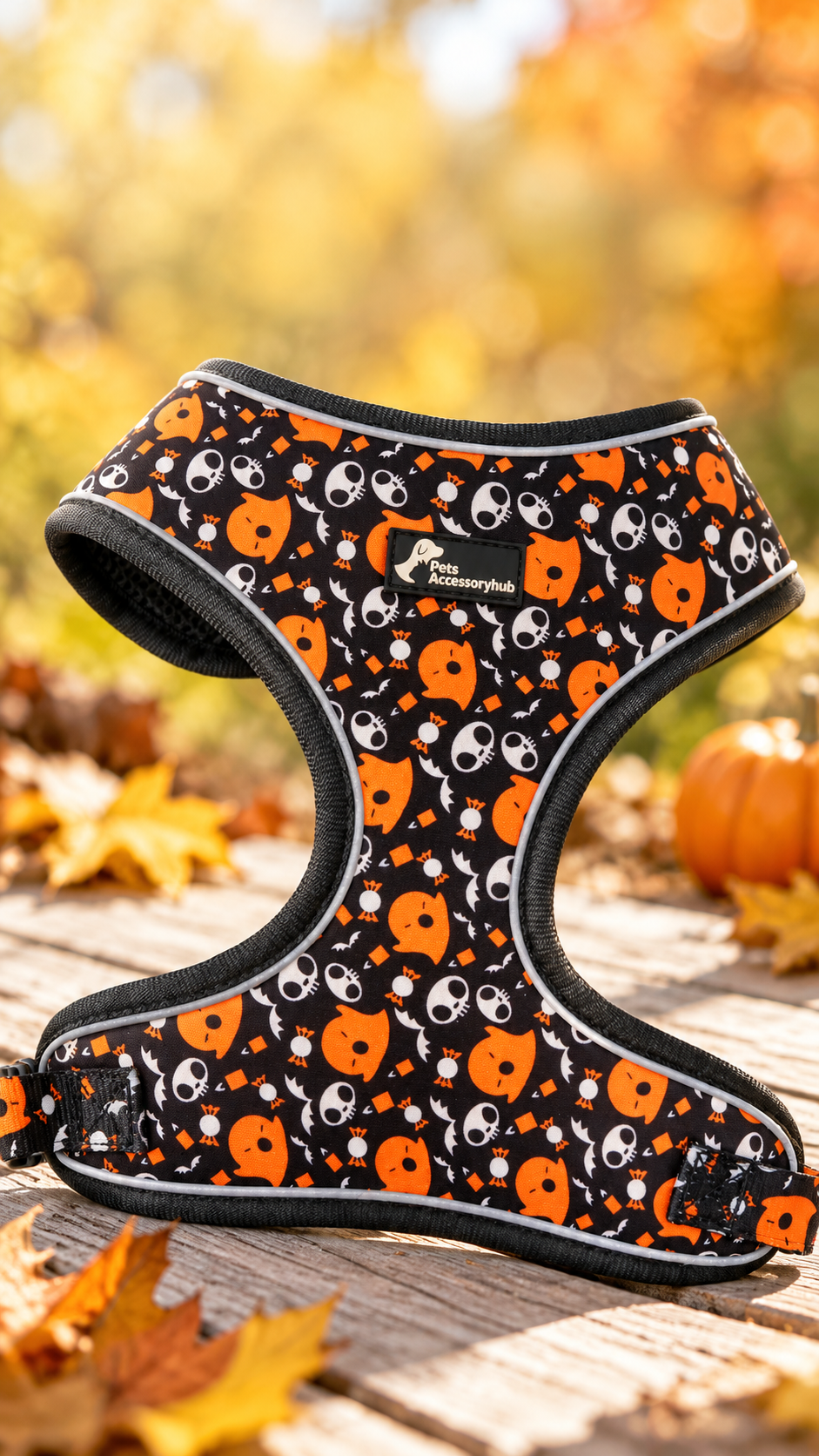
Request an actual-size artwork layout for the harness panel, leash, collar and each accessory. Review the orange ghosts, white skulls, bats and candy as individual motifs: which must remain recognizable, and where is a cropped motif acceptable?
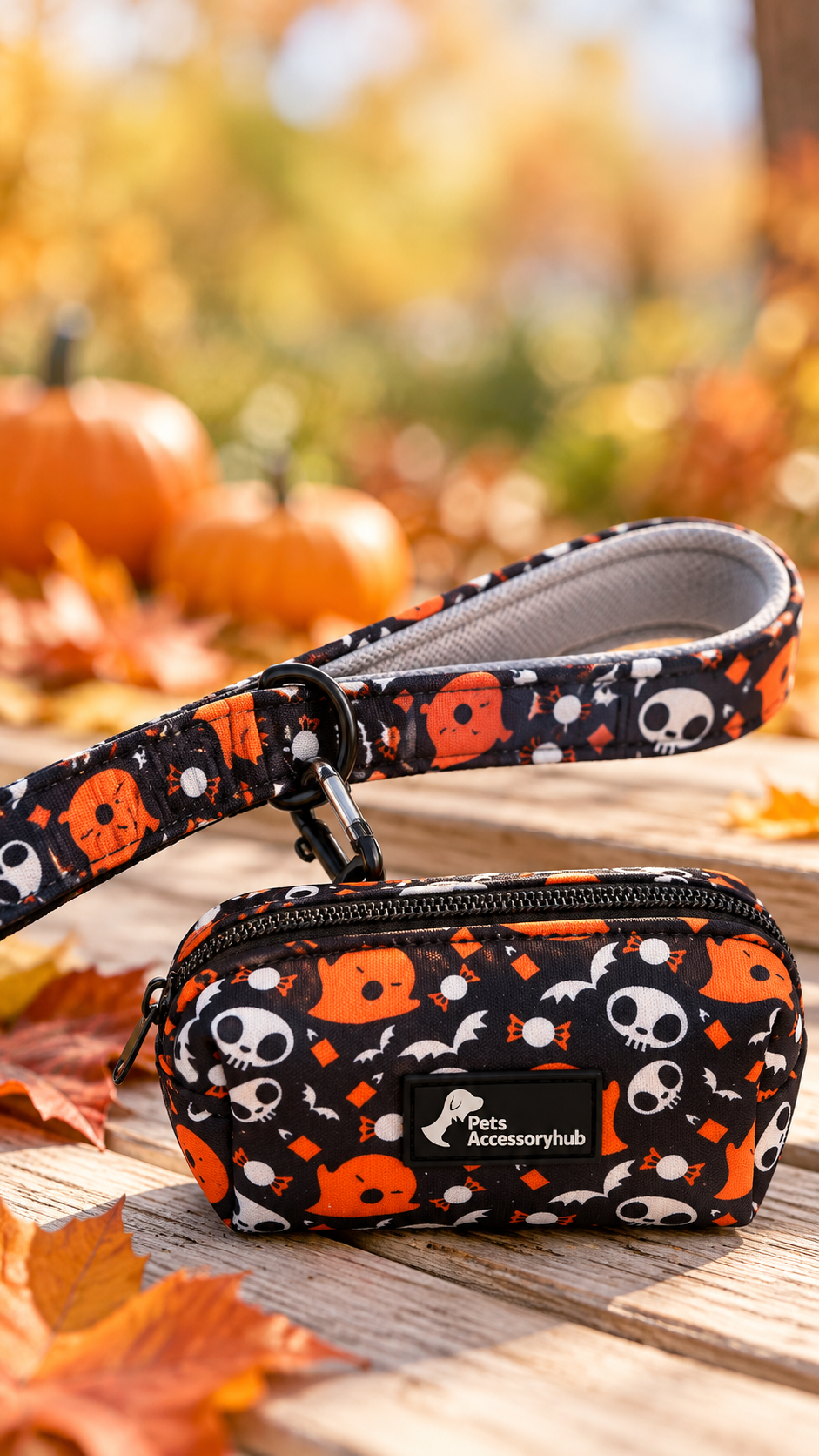
On the vest harness, review the visible chest area and the curved leg openings. On a leash, examine the narrow repeat and the sections folded at the handle and hook. On a pouch, consider the zipper, curved corners, dispenser opening and label. For a bow tie or tied bandana, look at what remains visible after folding or knotting.
Decide whether you want a repeating print with variable placement or a specifically positioned feature motif. Mark the required visible area on a proof. Do not assume that a flat artwork sheet defines how every finished piece should look.
3. Check direction and color as a collection
Mark the intended upright direction for each item in its normal display position. Check the harness chest panel, leash handle, collar when closed, pouch when hanging and bandana when tied. A pattern can match in color while reading upside down on one component.
Compare physical printed samples together under the same lighting. Record separate references for the orange and black print, light motifs, edge binding, thread and hardware finish. A shared color name is not a complete acceptance reference. If different components use different substrates, ask for each proposed printed sample rather than treating one approved swatch as approval of the whole collection.
Keep a change list that identifies every affected SKU. An orange color revision or a resized repeat should trigger a check of the related labels, packaging artwork and campaign images, not just the item where the change began.
4. Review logos and accessory attachment in context
Approve logo artwork, color treatment, orientation and position separately for the harness patch, leash label, collar and pouch. Review the smallest application at finished size. Confirm that the logo stays readable beside the busy seasonal print and does not cover a motif you intend to feature.
Evaluate the proposed items together on the physical sample. The pouch reference shows an attachment near the leash handle: specify the intended D-ring connection, then check the pouch clip against the actual ring. Keep the handle loop separate from the pouch attachment. Review how the pouch hangs and whether its label and opening remain accessible.
Specify proposed component dimensions and finish in the brief. Use the pet accessory hardware and attachment options to discuss choices, then confirm the selected combination on your sample.
5. Match packaging and product-page contents
Build one packing reference for every kit variant. Show each included item, quantity, size identifier and intended packing position. A three-piece kit should not inherit a six-piece collection photograph without a clear contents explanation.
Review the retail title, barcode assignment, size label, hangtag and product-page image against that reference. Make optional accessories visibly separate in the listing. If customers can choose a harness size, confirm how that selection is linked to the kit identifier and how the matching items are picked.
Ask for a packed sample using the proposed presentation. Check what the shopper can see, whether the seasonal print is recognizable and whether the contents can be checked without ambiguity. Keep the accepted packing image with the item approvals.
6. Plan approval gates around the selling window
Share the intended on-sale date, required receiving date, destination and photography deadline at the first enquiry. Ask the supplier to propose a sequence for artwork review, sampling, revisions, production and delivery. Request written confirmation of the proposed schedule; a seasonal theme does not establish a delivery promise.
Before requesting a quotation, prepare:
- The collection artwork version and approved color references.
- Individual SKUs, kit contents, size mix and quantities.
- Item-specific print layouts, logo positions and hardware preferences.
- Packaging format, selling channel, destination and intended launch dates.
- Named approvals still required before production can proceed.
For the wider product approval process, use our OEM pet accessory sampling checklist. Keep the seasonal print and kit records alongside that general specification, so a later reorder refers to the exact approved assortment.
Discuss your seasonal collection
Send PetsAccessoryHub your theme, item list, target market, quantity by variant and preferred retail presentation. Request a custom quote or email sales@petsaccessoryhub.com to discuss a collection-specific brief.