 Low MOQ OEM/ODM
 Free Digital Proof
 Phone:



A dual dog bungee leash gives a pet brand several decisions to make before it becomes a retail product: one handle, two branches, connecting hardware, branding and packaging must work together. For buyers, a productive starting point is a clear sample brief that turns a product reference into measurable requirements.
The red design references shown here explore gathered bungee branches, dark snap hooks and a loop handle. These images communicate a design direction rather than a single approved production specification. Material composition, dimensions, intended use and performance requirements belong in the written brief and the sample review. Here is a practical way for brands, wholesalers and distributors to organize that process.
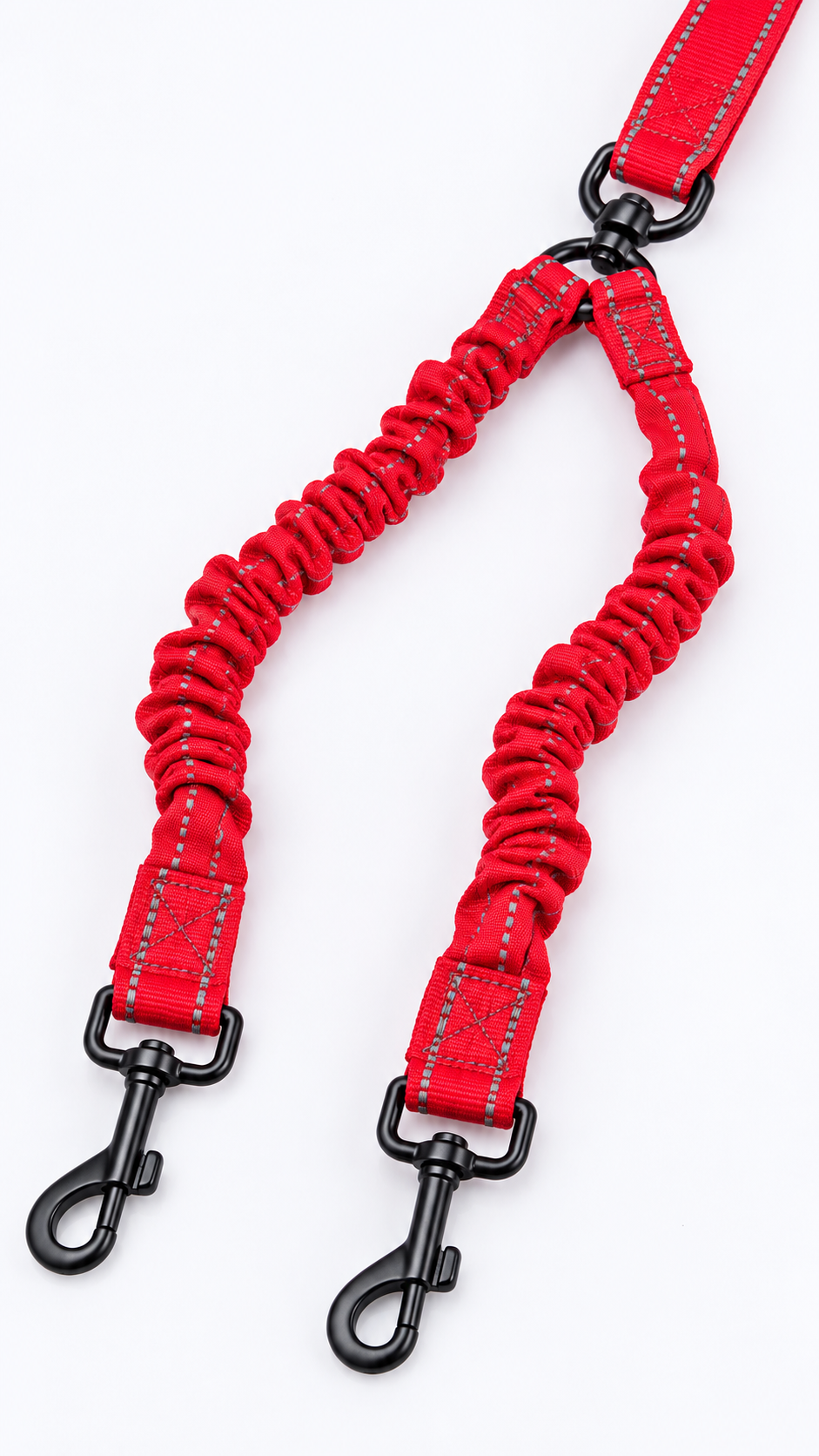
1. Define the product you want to sell
Describe your intended customer and sales channel before requesting a quotation. A boutique display, an online product listing and a distributor catalogue may need different packaging and image sets, even when they share a similar product concept.
State the walking use you intend to support and ask the supplier to identify any limitations. Do not assign a dog weight range from a lifestyle image. If your range requires a weight rating, agree on the supporting evaluation and the wording allowed on the label before approving marketing copy.
Make the configuration explicit: is the order for a complete leash with a handle and two branches, or for a separate coupler? Identify every connector and whether it is fixed or removable. Annotated photographs or a simple component drawing reduce ambiguity when suppliers interpret the same reference differently.
2. Turn “same as the picture” into measurements
Give each dimension a name and define its measurement points. Request the handle opening, webbing width, branch length and overall length as separate entries. For gathered bungee sections, distinguish the relaxed measurement from an extension measurement. Any extension measurement needs an agreed method and load; a stretched photograph is not a measurement method.
Ask how much variation is acceptable for each dimension. Both branches should be assessed against the agreed specification, rather than judged only by whether they look similar. Record the units and whether hardware is included in each length.
Separate appearance from material identification. Request the proposed webbing, elastic element, handle lining, thread and hardware materials in writing. Gray edge stitching in a photograph does not establish reflective performance. If a functional feature matters to your range, include it as a separate requirement with evidence to review.
3. Review the connection points as a complete system
The handle, central connection and two branch hooks deserve individual attention during sampling. Ask for clear photographs of each junction and review the physical sample from both sides. Check that the supplied configuration matches the drawing, including the number of rings and connectors.
Operate every hook through its normal opening and closing movement. Examine the gate alignment, edges, finish and the way the webbing sits in the hardware. Review seams and folded ends for consistency against the approved sample. These observations help identify questions; they do not establish a strength rating.
If you need strength, fatigue, corrosion or other performance testing, agree on the method, acceptance criteria, sample quantity and responsible party. Avoid putting “heavy duty,” “shock absorbing” or “tangle free” on packaging solely because the product has elastic sections or rotating hardware. Each claim needs its own basis.
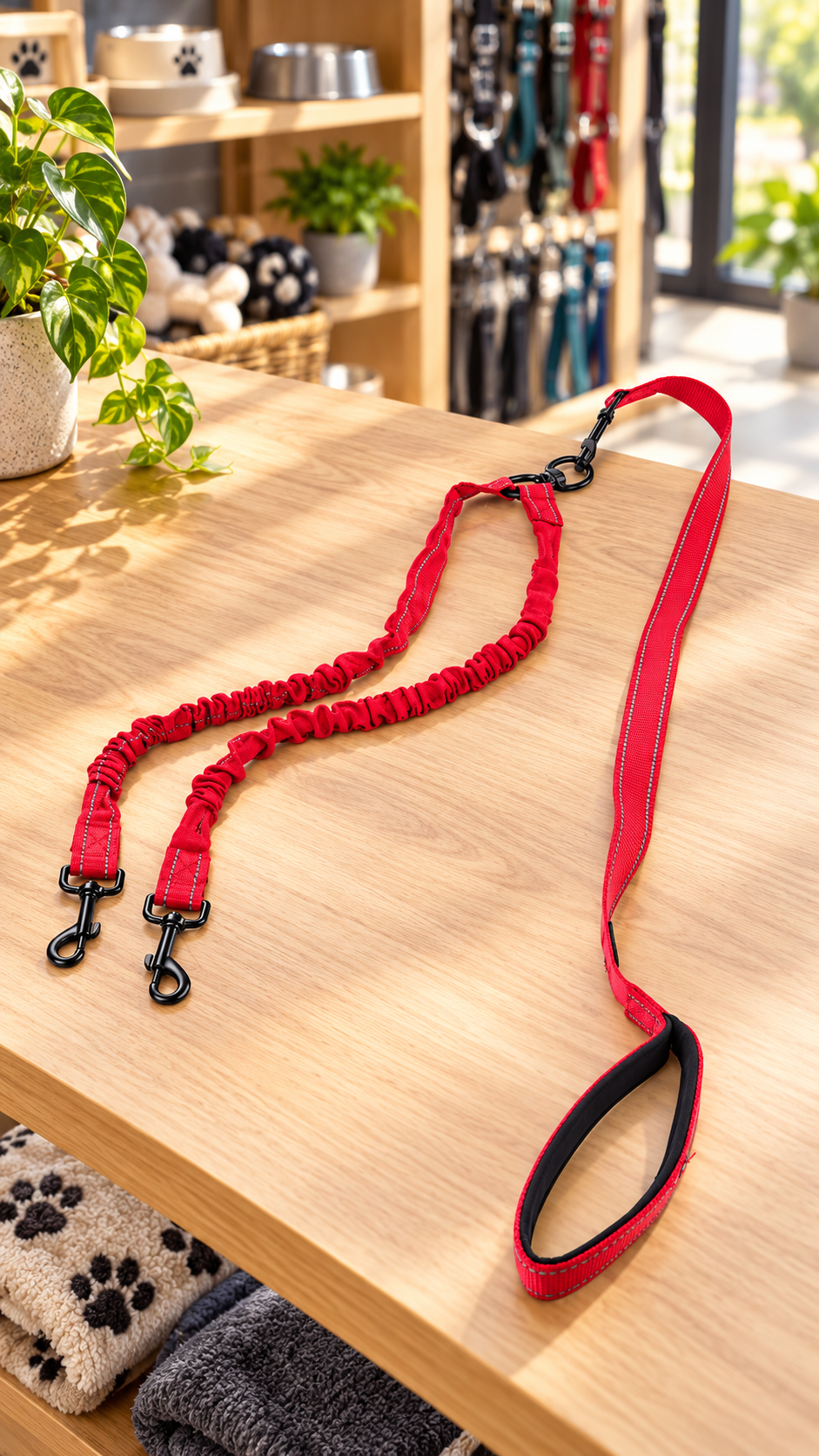
4. Evaluate the bungee and handle on the sample
A photograph can show gathered construction, but it cannot communicate how the elastic responds in use. Ask the supplier to explain the proposed construction and provide a sample for evaluation against your brief. Record the relaxed dimensions, the agreed extension behavior and any recovery checks you require.
Review the handle opening and lining with your intended user in mind. Inspect the inner seam, lining coverage and attachment to the main strap. If your team wants a particular handle feel or thickness, give a physical reference or a measurable requirement instead of relying on “comfortable” as the entire specification.
Keep subjective observations separate from pass or fail criteria. “Handle feels too bulky for our range” is useful design feedback; a final acceptance requirement should say what will change and how the revised sample will be compared.
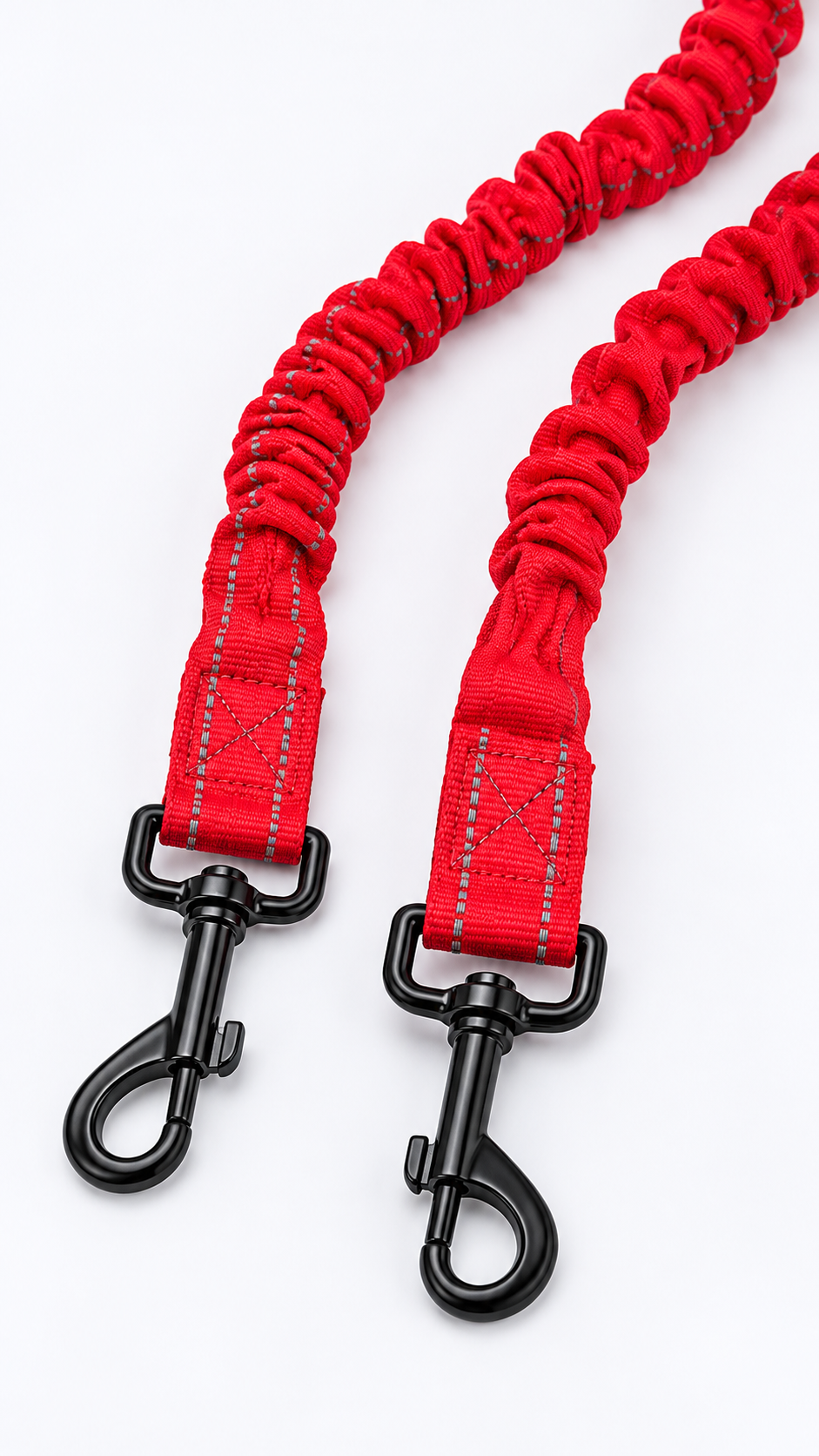
5. Approve branding and packaging together
Choose a branding position that stays legible when the product is folded for sale. Ask about available application methods, artwork size and placement limits before finalizing the design. Confirm the logo file, colors, orientation and position on a marked proof, then check the application on the physical sample.
For a coordinated range, review the red webbing, dark hardware, thread and packaging as one palette. Approve a physical color reference where color consistency matters. A screen image alone is an unreliable basis for a color acceptance decision.
Your packaging brief should identify the product name, contents, barcode area, instructions, care information and any required market-specific wording. Confirm who supplies and approves this information. Ask for a packed sample so your team can review how the product hangs, how connectors are secured and which details remain visible.
6. Request a quotation you can compare
Send the same brief to each supplier and ask them to flag proposed substitutions. Request separate confirmation of sample cost, customization charges, packaging, order quantity options and estimated timing. Treat these as quotation questions rather than assuming a standard minimum order or delivery commitment.
For the first enquiry, include:
- Target market, sales channel and intended product configuration.
- Annotated reference images and a list of required measurements.
- Proposed color, branding position and packaging format.
- Intended claims and the evaluation or documentation they require.
- Requested quantity options and your desired sample-review date.
When the sample is ready, keep a dated approval record with photographs, measurements and outstanding changes. Identify the approved version so later artwork or component substitutions can be reviewed before production. This gives both buyer and supplier a clear reference for the order.
Discuss your dual dog leash brief
Planning a private label walking range? Share your reference images, target market, preferred configuration and quantity options with PetsAccessoryHub. A clear brief makes the next conversation about samples, branding and packaging more useful.
Send your sourcing brief or email sales@petsaccessoryhub.com.