 Low MOQ OEM/ODM
 Free Digital Proof
 Phone:
Wholesale dog bandanas look simple, but fabric behavior, print placement, size grading and sewing all affect how the finished product fits and presents at retail. A quote-ready brief should define the bandana format, dimensions, artwork, branding, packaging and quantity by size instead of relying on a single reference photo.
Choose the right dog bandana format
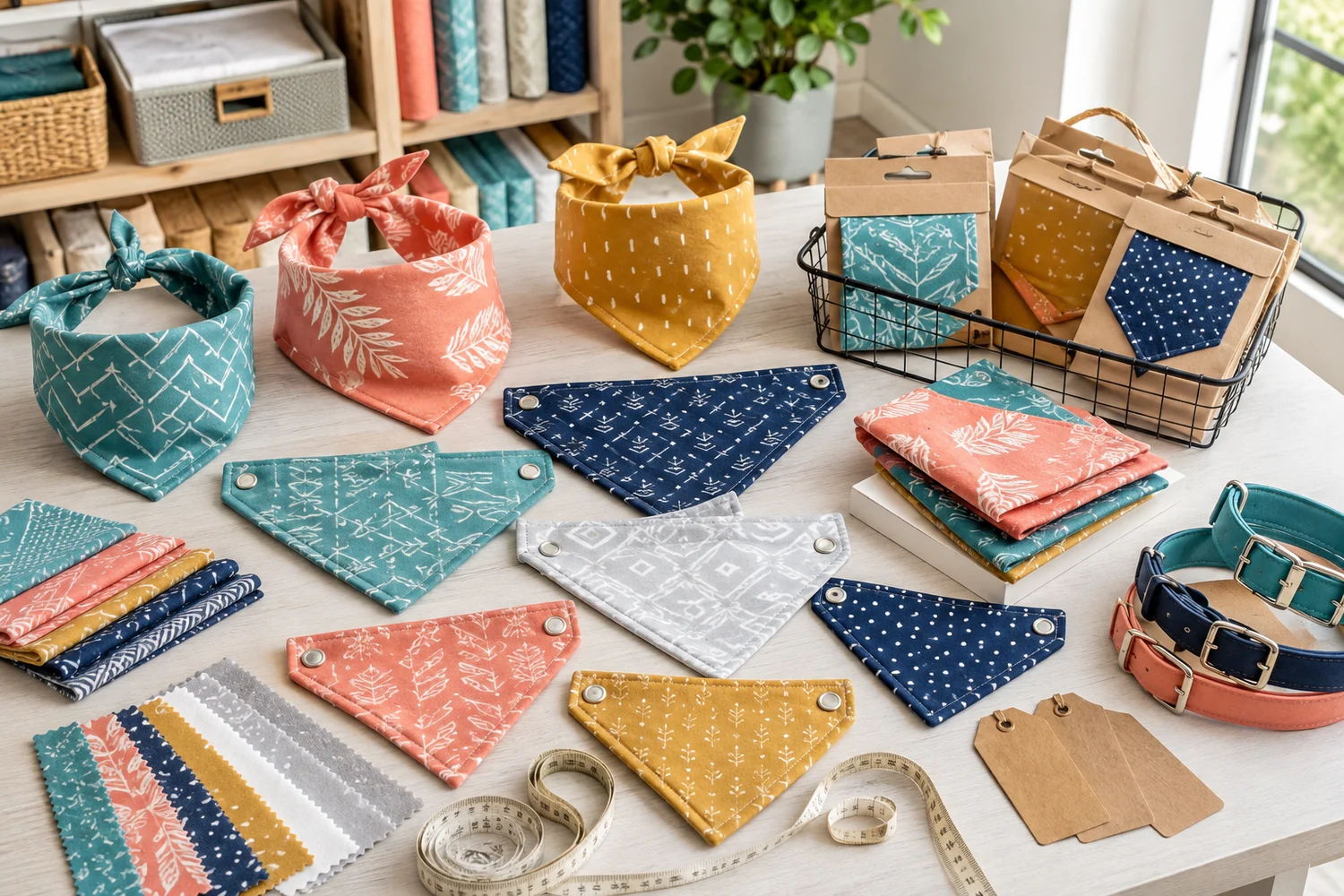
Tie-on bandanas provide an adjustable traditional look. Over-the-collar styles use a sewn channel and keep the product in position without a separate knot. Snap closures make fitting faster, while reversible designs support two patterns in one item. The format changes fabric consumption, sewing time, measurements and labeling, so it should be confirmed before artwork is finalized.
Start from the intended customer and sales channel. A grooming giveaway may prioritize low bulk and fast packing, while a private label collection may need reversible construction, branded labels and coordinated colors. Review the custom bandana options and select a base construction before requesting variations.
Compare fabrics for bulk dog bandanas
| Fabric | Typical benefit | Approval points |
|---|---|---|
| Cotton or cotton-rich woven | Soft hand feel and familiar retail appearance | Weight, shrinkage, weave, colorfastness and print response |
| Polyester woven | Consistent color and broad print compatibility | Drape, sheen, heat response and edge finish |
| Brushed or peach-finish fabric | Softer premium touch | Pilling, print clarity and lot consistency |
| Recycled-content fabric | Supports selected sustainability programs | Documentation, approved claims, color and availability |
Specify composition, weight or an approved reference swatch. Two fabrics with the same fiber name can differ in weave density, softness and print result. If care claims matter, approve washing and appearance checks on the decorated sample rather than on undecorated fabric alone.
Build a usable size matrix
For tie-on styles, state the finished width, center drop and total tie length. For over-the-collar styles, define channel width and the collar width it must accept. Snap styles need neck ranges and exact snap positions. Record whether measurements are taken flat and include a practical tolerance.
A three- or four-size range is often easier to merchandise than many overlapping sizes. Test the smallest and largest sizes on representative collars or fit forms. The print must also be reviewed at every size because a motif that looks balanced on a large pattern piece may become crowded after scaling.
Select printing and logo methods
Sublimation can suit full-color artwork on compatible polyester. Screen printing works well for selected spot-color graphics. Digital textile printing can support detailed patterns on approved fabric, while embroidery, woven labels and heat transfers can add separate branding. Confirm artwork resolution, repeat size, color references, bleed, safe area and whether placement should be centered or random.
If the bandana will coordinate with a custom dog collar or custom dog leash, approve a shared palette but allow for differences between textile printing, dyed webbing and coated hardware.
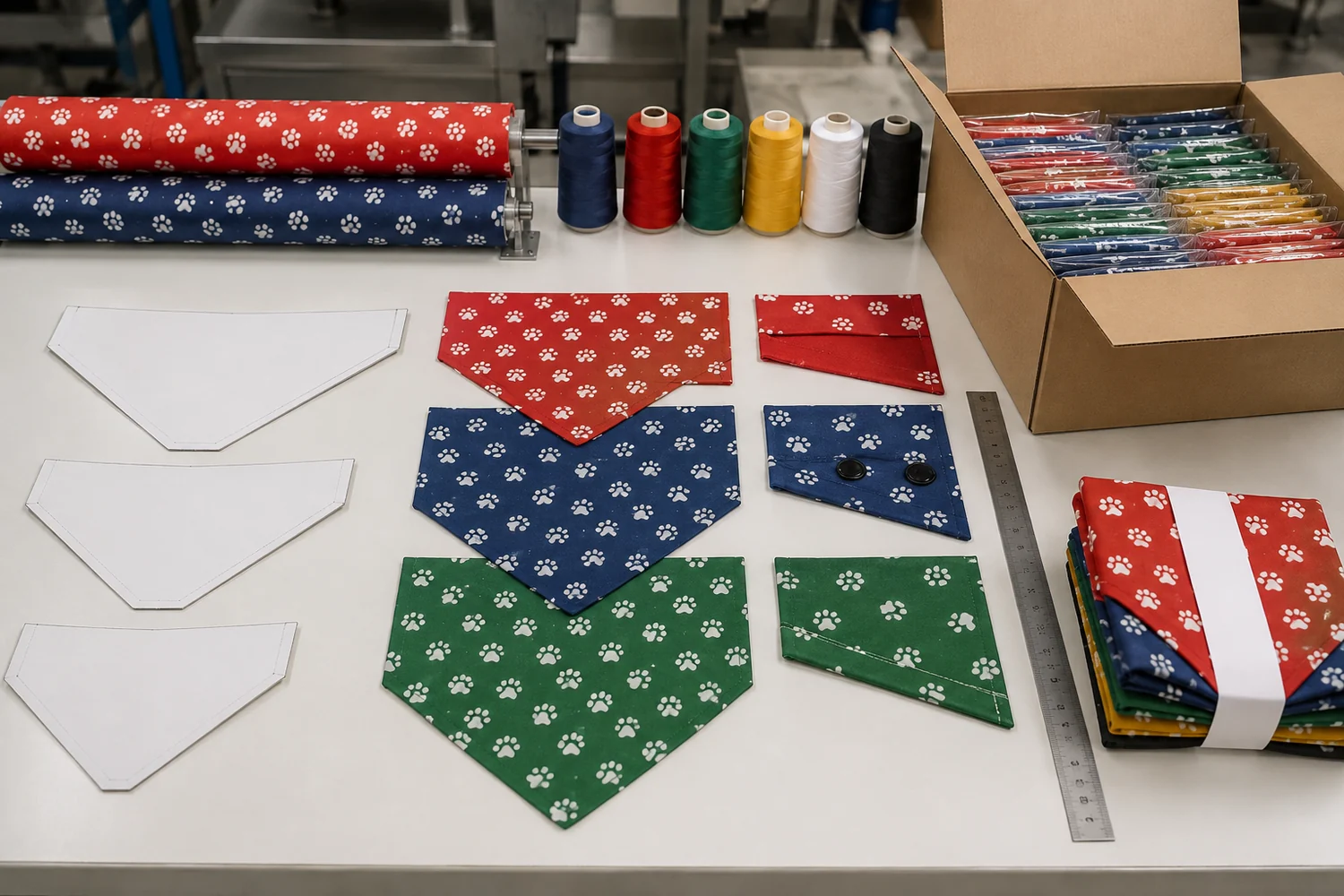
Control sewing and finished appearance
Define hem type, seam allowance, stitch density, thread color, corner shape and loose-thread standard. Over-the-collar channels must remain open and even. Snap placement should be measured from a fixed point, and reversible pieces should lie flat without twisted layers or bulky corners.
Keep an approved pre-production sample for each construction. Bulk inspection can check dimensions, print orientation, color, visible defects, seam security, label position, snap function and quantity by SKU. Random samples should come from different cartons and size groups.
Plan retail packaging and carton packing
Common options include a belly band, hang tag, backing card, individual bag or grouped pack. Confirm barcode position, care information, country-of-origin wording and warning requirements for the target market. The fold should display the print and size while avoiding a thick package that increases freight volume.
Provide a complete order matrix for every fabric, print, size and package version. This helps the supplier calculate material use and prevents mixed-size cartons. For broader launch planning, the low-MOQ pet accessory guide explains how shared materials and packaging can simplify a first collection.
Wholesale dog bandana quote checklist
- Bandana format and intended sales channel
- Finished dimensions, neck range and tolerance by size
- Fabric composition, weight, color and finish
- Artwork, print method, repeat scale and placement rule
- Hems, seams, snaps, labels and care requirements
- Quantity by size, color and design
- Retail packaging, barcode and carton assortment
- Sample approval, inspection, destination and delivery date
Frequently asked questions
What information is needed to quote bulk dog bandanas?
Send the format, size chart, fabric target, artwork, quantity by design and size, logo label, packaging and destination. A reference sample is useful when fabric hand feel or fit is important.
Can one order include several patterns and sizes?
Yes, subject to the material, printing and production setup. List each SKU in an order matrix so minimums and price differences can be reviewed clearly.
Should printing be approved before bulk sewing?
Yes. Approve color and print scale on the production fabric, then approve a sewn pre-production sample before bulk cutting.
Request a wholesale dog bandana quote with your artwork, size matrix, quantities and packaging requirements. PetsAccessoryHub can then compare the requested construction on a consistent basis.