 Low MOQ OEM/ODM
 Free Digital Proof
 Phone:

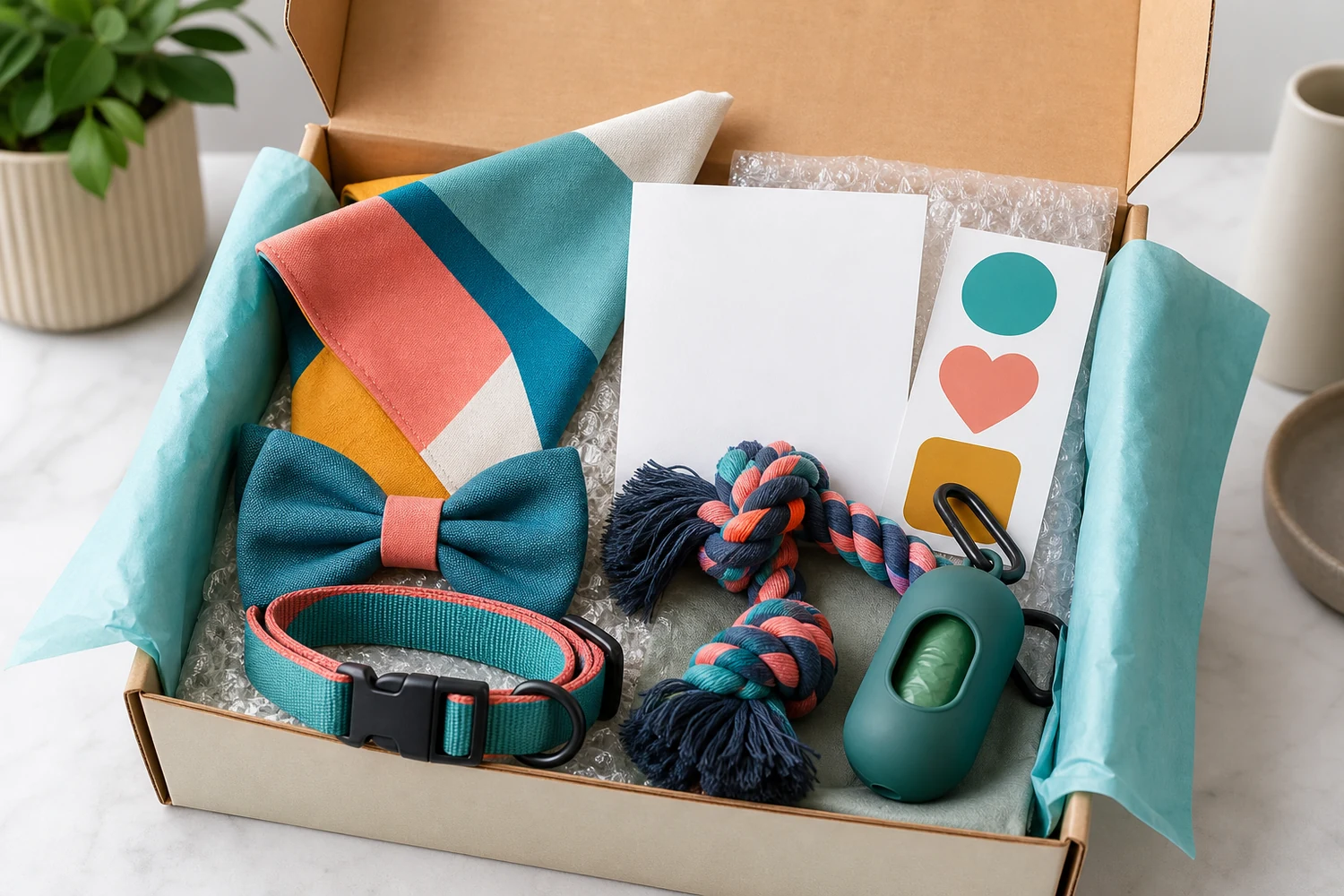
Subscription boxes need products that feel fresh, fit the monthly theme, arrive on schedule, and work across a varied customer base. Sourcing custom pet accessories for subscription boxes therefore requires a different plan from ordering one standard retail SKU. Product selection, size risk, color splits, branding, packing, and delivery all need to be resolved before production begins.
Start with the customer promise and monthly theme
Define what subscribers expect before choosing products. Is the box built around outdoor walks, seasonal photos, training, travel, enrichment, or everyday essentials? Record the target dog or cat profile, selling price, product count, desired perceived value, delivery month, and sustainability requirements.
A clear theme helps the supplier recommend compatible materials, colors, and customization methods. It also prevents a box from becoming a random collection of items that compete for space and budget.
Choose products with manageable fit risk
Bandanas, bow ties, poop bag holders, treat pouches, rope toys, and small walking accessories can serve broad customer groups with fewer size variants. Collars and harnesses may create more perceived value, but they need an accurate size mix and clear subscriber data. A poor size ratio can leave the program with unusable inventory.
Review the available pet accessory styles and divide candidates into universal, adjustable, and size-specific products. Use universal products when subscriber measurements are limited, and reserve fitted products for programs that collect reliable neck and girth data.
Build a product matrix before asking for prices
| Decision | Why it matters | Information for the supplier |
|---|---|---|
| Monthly quantity | Determines material purchasing and production efficiency | Total units, reserve quantity, and expected subscriber range |
| Variant split | Small color and size lots can raise handling costs | Quantity by color, size, pattern, and logo version |
| Target packed size | Controls box fit and shipping volume | Maximum dimensions, folding method, and unit packaging |
| Launch date | Sampling and assembly must work backward from dispatch | Delivery destination, required arrival date, and freight plan |
| Branding level | Changes setup, MOQ, and perceived exclusivity | Stock color, custom print, woven label, patch, tag, or full packaging |
Use customization where subscribers notice it
A small woven label, printed pattern, rubber patch, branded buckle, coordinated hang tag, or exclusive color can make the product feel specific to the box. Choose one or two visible brand elements instead of adding expensive customization to every component. The product should still be useful after the monthly packaging is discarded.
Send vector artwork, color references, logo dimensions, and placement instructions early. If a theme uses several products, create a shared color and artwork board so the collection feels coordinated even when materials differ.
Plan MOQ around the complete assortment
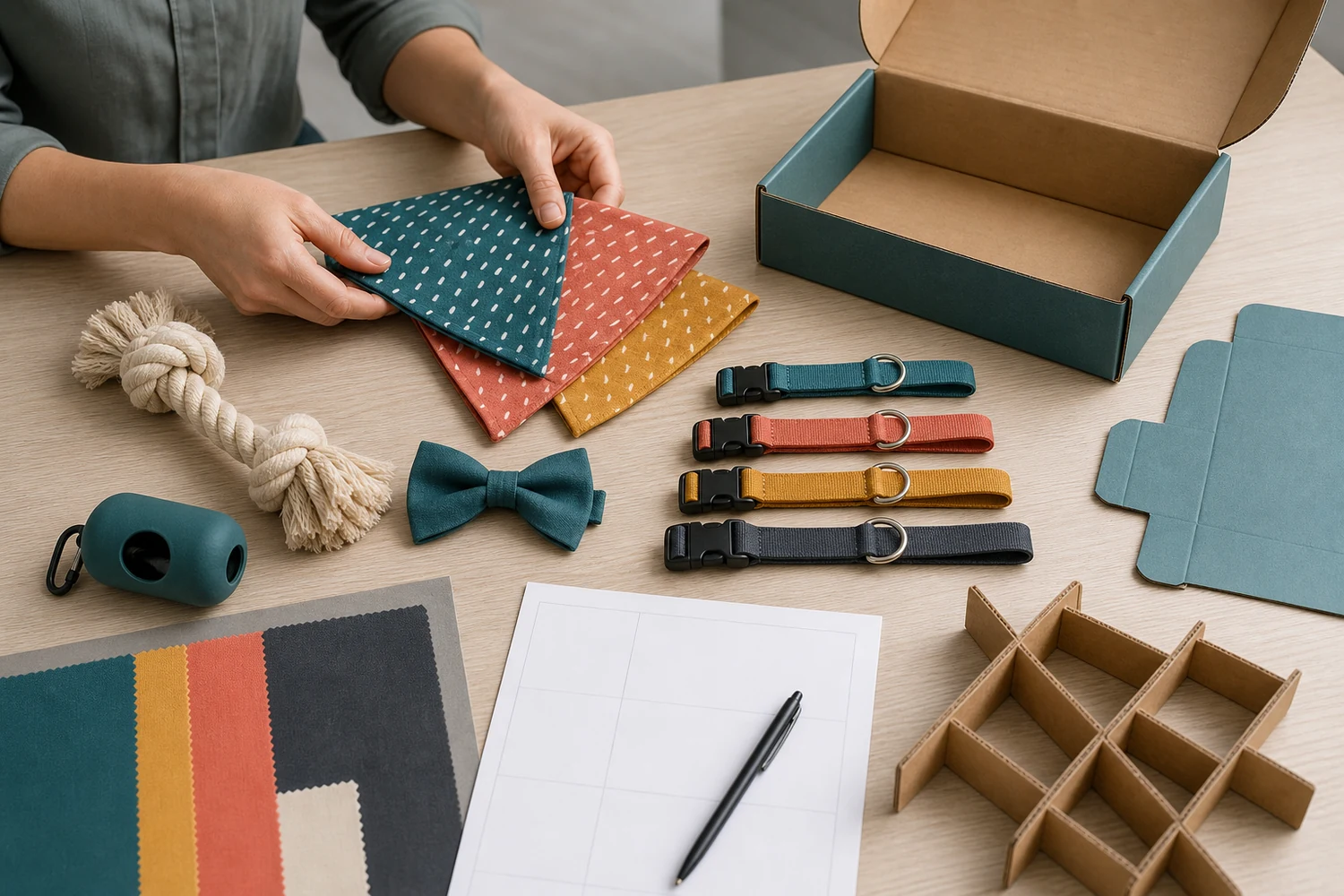
Total box volume does not always equal an efficient production quantity. Five colors, four sizes, and two artwork versions can turn one large order into many small production lots. Ask the factory to show the minimum by material, color, print, and SKU. Consolidating thread colors, hardware finishes, packaging sizes, or labels may reduce setup and sorting work.
For early-stage programs, combine a customized core item with selected stock-color components. This protects the launch schedule while still creating a branded experience. The pet accessory pricing guide explains how variant splits affect a factory quote.
Approve the product and the packed presentation
Do not approve only a loose product sample. Review the item folded or arranged exactly as it will enter the box. Confirm whether hang tags, bags, belly bands, inserts, or ties create too much volume. Check that metal hardware cannot scratch other products and that printed materials do not transfer color.
The approval set should include the physical product, artwork, color reference, measurement chart, packaging proof, barcode or SKU data, and a photo of the intended packed configuration.
Define kitting responsibilities
Kitting may happen at the product factory, a fulfillment center, or the subscription-box warehouse. Decide who receives each component, performs final inspection, adds inserts, builds the box, seals it, and applies shipping labels. If the factory prepares multiproduct kits, provide a bill of materials and one approved master kit.
Include spare units for inspection findings, replacement requests, photography, influencer samples, and shipping damage. The reserve percentage should reflect product complexity and the program's customer-service policy.
Inspect by SKU and finished kit
Check measurements, stitching, hardware, print, color, labels, quantity, and packaging for each accessory. Then inspect complete kits to confirm that every box contains the correct assortment. A production order can pass individual product counts and still fail because kits contain mixed colors or missing inserts.
Use a documented sampling plan and classify issues before shipment. High-risk fitted products deserve additional size checks, while printed products need artwork and color comparison across several cartons.
Work backward from the subscriber dispatch date
Allow time for specification, quotation, artwork, sample production, sample shipping, approval, material purchasing, mass production, inspection, freight, customs, kitting, and final fulfillment. Seasonal products have little value if they arrive after the campaign window. Add decision deadlines for artwork and size ratios so late changes do not quietly consume the production buffer.
Subscription-box sourcing checklist
- Theme, audience, target value, and delivery month
- Product list and quantity by size, color, and design
- Materials, dimensions, hardware, and performance expectations
- Logo artwork, color references, labels, and packaging
- Maximum packed dimensions and box arrangement
- Sample, testing, inspection, and reserve quantities
- Kitting location, bill of materials, and fulfillment plan
- Destination, trade term, freight method, and required arrival date
Request a quote for the complete box program
Share the product matrix rather than requesting six unrelated unit prices. Pets Accessory Hub can review the assortment, identify shared materials and branding opportunities, and flag size or packing risks before sampling. Start a subscription-box accessory quote with quantities, theme, artwork, destination, and required delivery date.