 Low MOQ OEM/ODM
 Free Digital Proof
 Phone: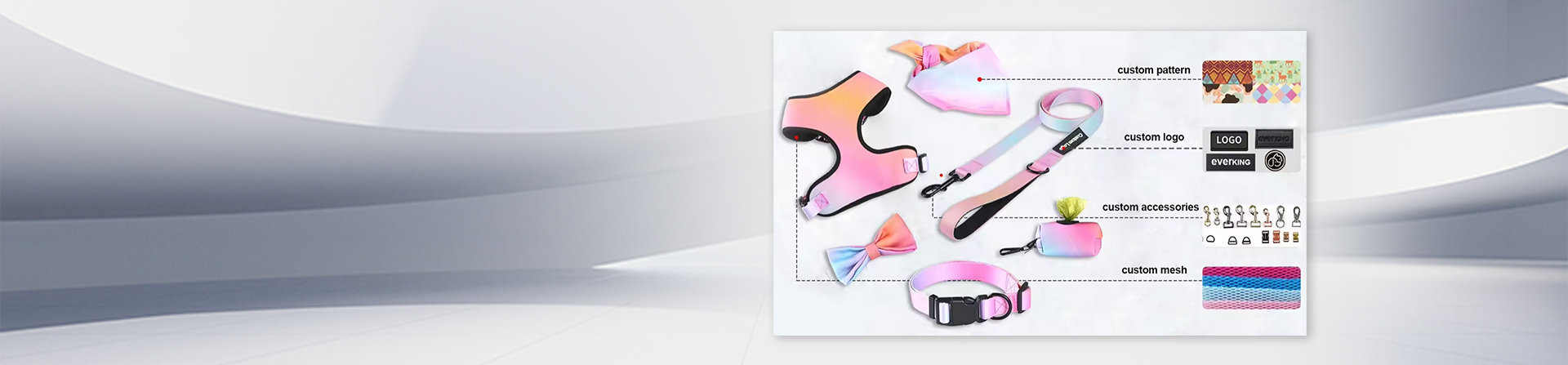
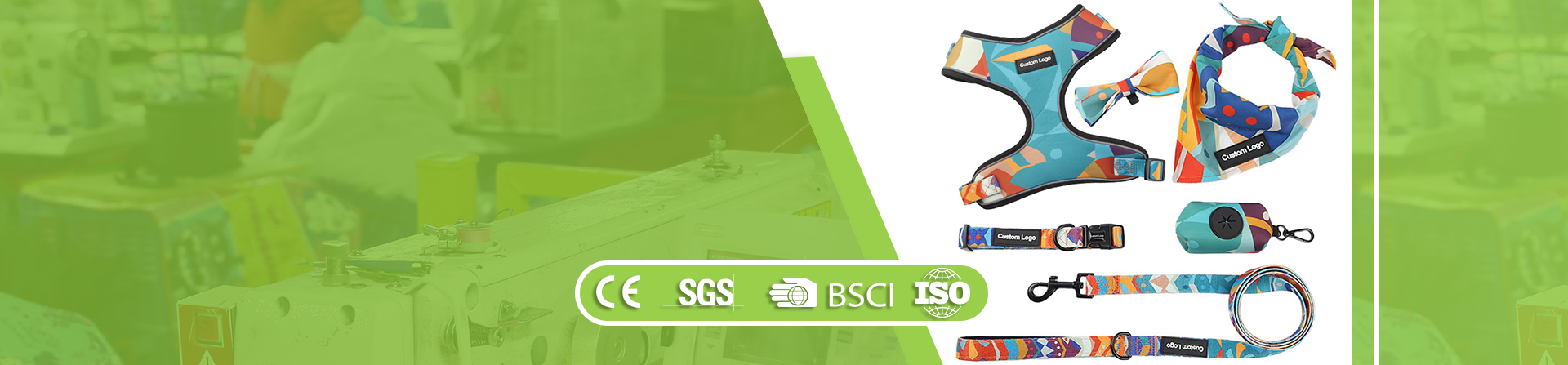

A private label dog walking set should look coordinated, fit consistently and perform as one product family. Matching a collar, leash and harness requires more than applying the same print to three items. Webbing width, hardware load, size grading, stitch construction, logo placement and packaging all need a shared specification.
This guide explains how brands can develop private label dog walking sets and a custom matching dog collar and leash set without losing control of quality, cost or reorder data.
Start with one product-family specification
Create one master brief for the collection, then add a product-specific sheet for the custom dog collar, custom dog leash and custom dog harness. The master brief should state the target customer, dog size range, retail channel, planned colorways, logo system, target quantity and required delivery date.
Each product sheet should define finished dimensions, material, webbing width, hardware, stitch pattern, tolerances and packaging. This prevents a visually matching range from using incompatible components or inconsistent naming.
Coordinate materials, colors and hardware
Polyester webbing is widely used for printed walking sets, while nylon, recycled textiles and padded constructions may suit different price points. When multiple factories or material lots are involved, approve color against a physical standard under consistent light. Review available custom colors and Pantone matching before locking artwork.
Hardware should be selected by product function. A collar may use a side-release buckle and welded D-ring; a leash needs a hook and comfortable handle; a harness needs buckles, adjusters and load-bearing rings positioned around the pattern. Compare pet accessory hardware and attachments as a coordinated group, including plating tone, plastic color and logo details.
Build a compatible size matrix
Do not assume that a small collar, small harness and one leash automatically form a usable set. Record neck range, chest range, adjustment range, webbing width and finished leash length for every SKU. Use clear size names and keep the same naming convention on product labels, cartons and online listings.
A practical assortment may use one leash length with several collar and harness sizes, but the hardware and width should remain appropriate for the intended dog range. Approve fit on representative models or forms and document where adjusters sit at minimum and maximum settings.
Approve a complete set sample
Individual samples can confirm construction, but the final approval should include a complete matching set. Check color consistency, logo scale, print direction, edge finish, hardware movement, stitch security, strap adjustment and contact points. Photograph the approved set next to the signed specification so production inspectors have a visual reference.
- Confirm printed artwork alignment on narrow and curved components.
- Check hardware finish and color across collar, leash and harness.
- Record pull-test or strength-test requirements for each load-bearing part.
- Verify size labels, care labels, barcodes and retail names.
- Approve the packed set, not only loose samples.
Plan MOQ around the total SKU matrix
MOQ depends on material color, printing method, hardware finish, logo setup, size split and packaging. A range with three colors and four harness sizes creates more production combinations than a single-color set. Ask whether MOQ applies per product, per color or across the combined order, and identify which components can share material or setup.
Use the custom pet accessory styles, MOQ and prices overview to compare core products. For a first launch, concentrate volume in proven colorways and sizes, then use reorder data to expand the matrix.
Design retail packaging and reorder data together
Sets can be packed as a complete kit, as coordinated individual products or in a modular display. Define whether the collar and leash share one barcode, whether each product remains individually saleable, and how a customer identifies the matching harness. Packaging should protect metal finishes and keep straps arranged without sharp folds.
Use a consistent style code, color code and size code on woven labels, hangtags, polybags and cartons. This helps the warehouse assemble sets accurately and allows future orders to reference the approved version.
Prepare a quote-ready walking set brief
Send the product mix, target sizes, quantity by color and size, material preference, logo artwork, hardware finish, packaging format, destination and deadline. Mention whether you need a coordinated prototype, photo sample or production sample.
Browse all custom pet accessories for a matching collection, then request a private label dog walking set quote. The collar is preselected as the starting product; describe the matching leash and harness in the project brief so the complete set can be reviewed together.